
BD v. Estimating v. Delivery: Removing friction and fixing the disconnect
Businesses rarely define what drives the friction between BD, estimating and delivery, much less take steps to overcome it in meaningful ways that make for better business and project outcomes. The majority put up with the challenges, moan about the shortfalls, and for better or worse, get on with the job.
Under the pressure of day to day projects, there is little recognition or regard for the effort and persistence required to bring in the right kind of work that will help fill a pipeline and bring a business strategy to life. Frequently translating to BD being dismissed as lightweight, cold calls, coffees, and not much else, a contractor serious about growing strategically can miss the value that a systemic approach provides.
My hypothesis? This perception and the ensuing dysfunction arises from not approaching BD as a system that threads through the business, that is, not seeing BD as vital link that ties it all together, from identifying opportunities to boots on the ground and practical completion.
Although the operating in the disconnect is the MO for most, it's an approach that underplays the importance of relationships forged through core functions that feed into each other, overlap, and ideally work together symbiotically. It also means money is very often left on the table and opportunities to do better, including to source, price, negotiate and deliver projects are missed.
Like so many things in business, the solution is simple to understand and not so easy to implement, but let's try to do it justice here.
Business development: Where it starts
There is no single point where the problem starts, but what follows are some telltale signs there's a disconnect.
BD is often seen as the relationship driver for a business, and there's no question it is. Whether undertaken by a founder, hired MD, or dedicated business development resource, forging relationships with identified key clients is foundational for executing a targeted business and BD strategy.
What many miss is that relationships don't just start and end with BD. Business development is the responsibility of (almost) everyone in your business. The estimators working with counterparts at subcontractors and suppliers; project managers, engineers, and site crews onsite dealing with clients; the accounts team communicating when people get paid or not. How each individual acts in their specific role has an impact, and very often determines whether people want to work with you. Whether you like it or not, with every interaction, the market is making an assessment of how easy it is to do business with you.
When BD is left solely in the hands of a single person, whether it's the boss, rainmaker, or someone else, here's what happens.
Estimators price to personal preferences
While BD must look to a range of horizons, from immediate cashflow demands to medium term solid pipeline fillers to long term aspirational goals, estimators may not always see, or want to see, the whole bigger picture. They want to price a certain job, well, because they want to. It has technical elements they like, it's easy / hard, and appeals to their technical capability. It's what they call 'a good job'. Of themselves, these aren't reasons to price work and personal choice shouldn't be the determining factor. The business and BD strategy should. The final decision maker on what is priced has to gauge when to hold the reins, push, and sometimes even squeeze estimators to get onboard. The most successful teams will work in lock step together because they share the same goal. Winning work that fulfils the strategy.
Project teams don't deliver on promises made at the time of pricing
Few things upset a client more than delivery falling short on commitments made during the tendering period by BD and estimators. Even if best efforts have been made to communicate the detail at a handover (if there is a handover), the significance of these details can be lost in the rush to get onsite, meet emerging client demands, and somehow deliver the project against what is frequently perceived as - and often actually is - an impossible budget and programme. This is where estimators need to step up and speak up. It's their job to help the project team understand the pricing / programme strategy and most importantly, identify where the risks and opportunities are, ensuring the project team knows what it's up against.
The blame game is unleashed
Under the very real pressure of project execution, fingers are often pointed back at estimators. And why wouldn't it? Monthly project meetings turn into hostile slinging matches where project managers, site engineers, and contract admins are called on to defend their positions and decisions. When things don't add up, business owners rightly want to know why. At the end of the project, however, after the final claim has been paid, people quickly move on, but don't take the lessons learned with them. Rarely is feedback given to those who priced the opportunity, but without this vital loop to close out the process, there's next to zero chance things will be different next time round, and so the crazy cycle continues. It would be far more effective to take the 30 to 60 minutes needed to review what worked, what didn't work, and what improvements should be integrated going forward. A simple register could capture that, while a single communication to the team would ensure the team is fully aligned with the way things are done. Apart from making a practical difference, closing the loop this way galvanises the team, focusing all in the direction of winning, improving, and working together.
Start building your BD system
It is literally never too soon to start building a more effective BD system.
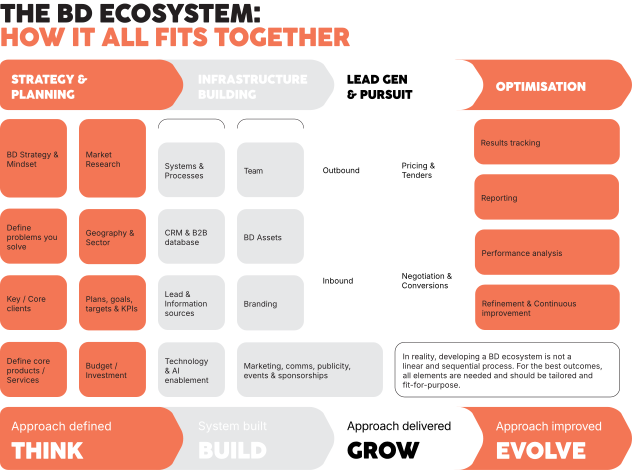
Start with one thing and start small because small things do make a difference. Cast an analytical eye across your approach to BD, estimating, tendering, and delivery. Ask:
Where are the biggest points of friction?
What's costing you not only dollars, but time, people, and client relationships?
What single communication loop could you close in the next week that would build a bridge or close a gap between pre contracts and delivery?
If you're not sure where to start, complete the BD scorecard and download the BD Guide for Contractors. It will help you understand where you are right now and what your next best step should be.
The BD Edge is a Brisbane based business development consultancy working with construction and heavy industry contractors and consultants to plan, develop, and implement a BD strategy that supports their growth.